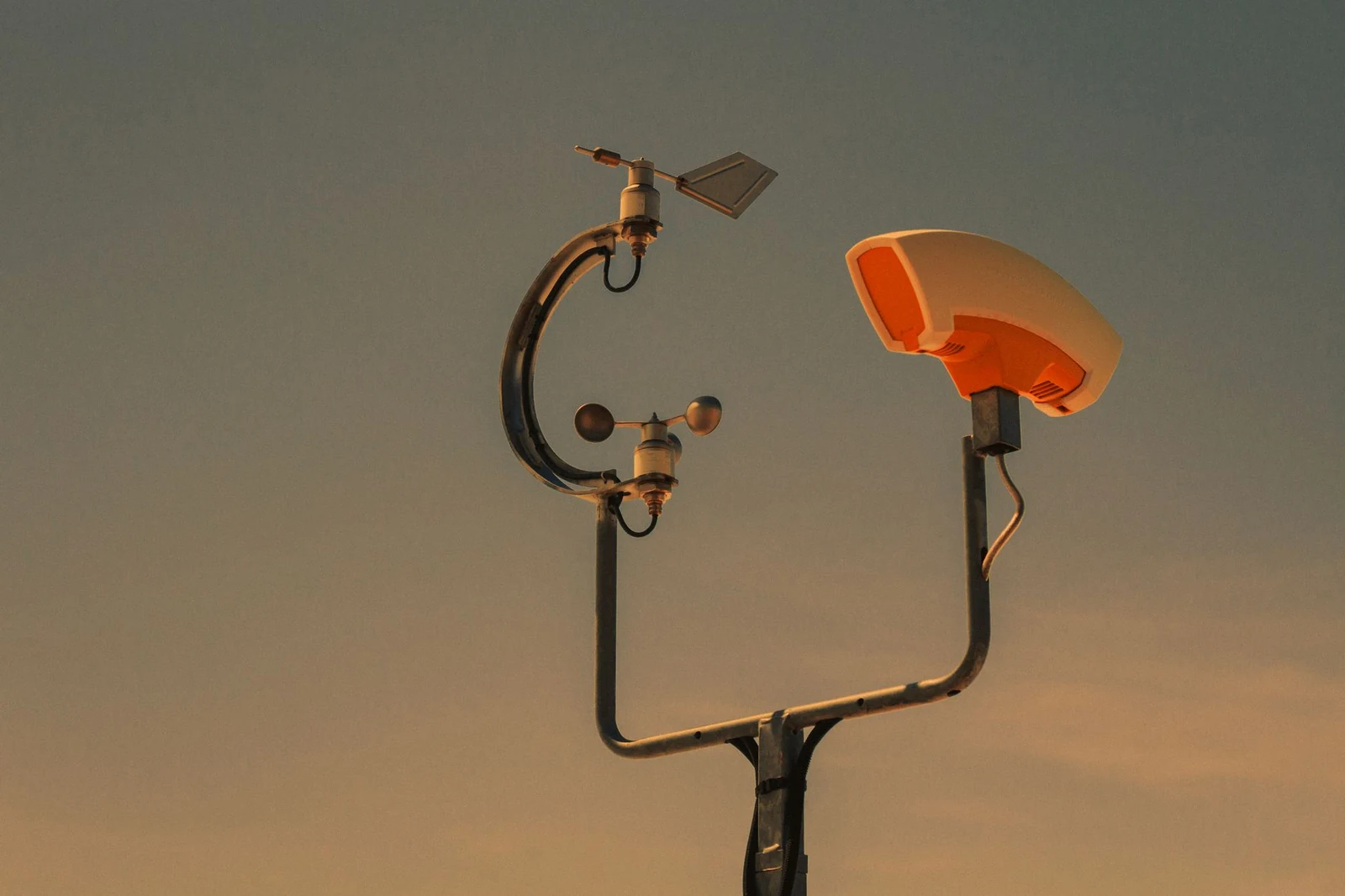
A remote monitoring solar power supply needs enough usable battery energy to survive the design outage and enough solar input to operate while restoring charge. Size the whole station, including communications, heaters and conversion losses. The sensor's average power alone is rarely the full load.
Table of Contents
Add every load at its actual duty cycle
List the sensor, recorder, modem, network hardware, environmental control and conversion equipment. For each, record operating power and hours per day. Daily energy is the sum of power × operating time, in watt-hours.
A modem that transmits briefly and sleeps between reports differs from one maintaining a continuous high-bandwidth connection. Heaters can dominate a winter budget even if they are absent from a summer measurement.
The Campbell Scientific CR6 manual includes power-budgeting and battery-supply considerations for a specific logger. Use the actual manuals for every component in the installed monitoring system; logger power is not a specification for a complete station.
Size usable storage first
Assume an illustrative constant average load of 8 W. Daily demand is 8 × 24 = 192 Wh. Three days without useful charging require 576 Wh delivered to the loads.
If the design allows 80% of nominal battery energy to be used and assumes 90% delivery efficiency, the starting nominal capacity is:
576 / (0.80 × 0.90) = 800 Wh
At a nominal 12 V, that corresponds to approximately 66.7 Ah. Temperature, aging, reserve and the battery manufacturer’s discharge limits can require additional capacity. The example is a method, not a battery selection for a specific chemistry.
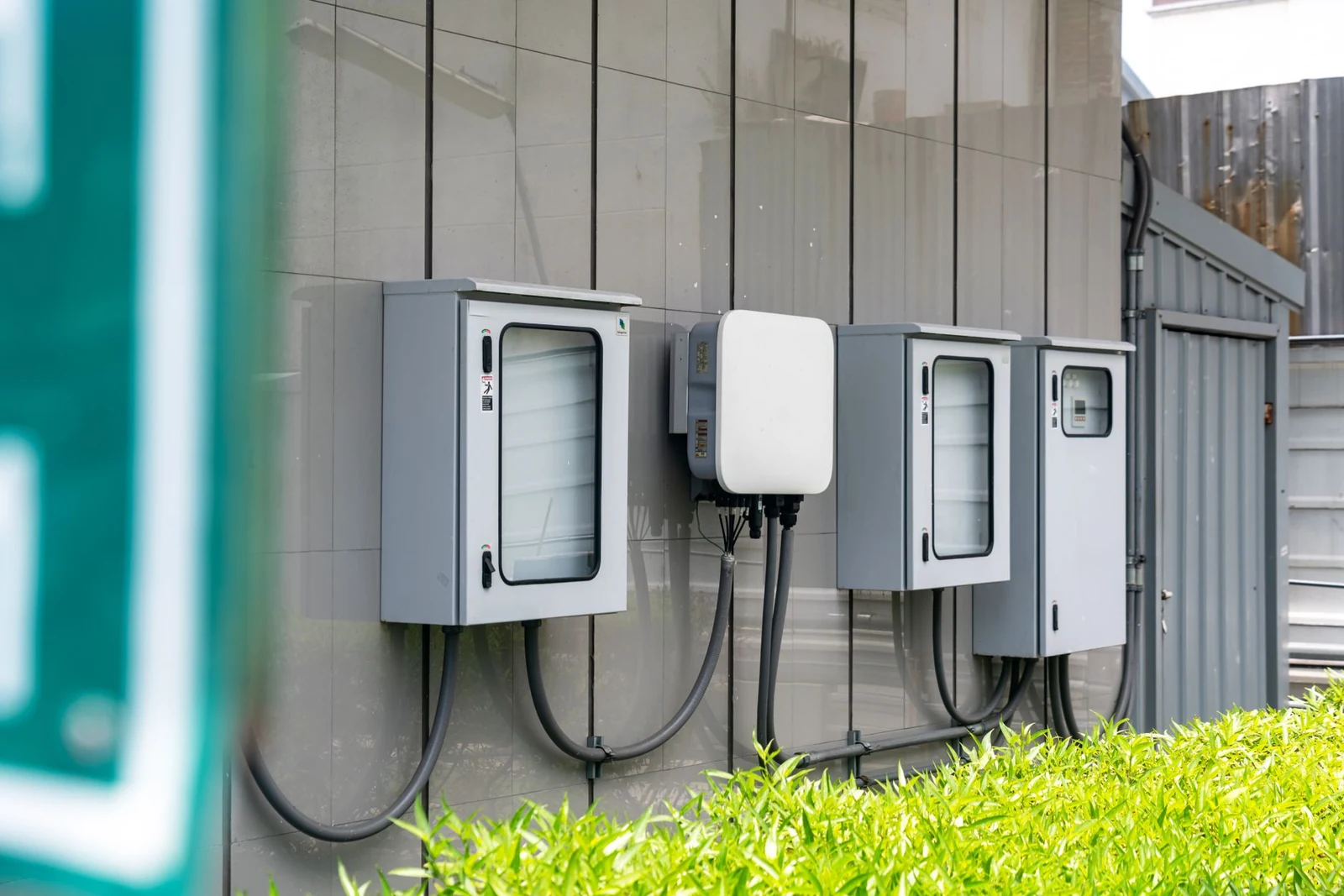
A separate peak-power check is necessary. A supply can contain enough energy for three days yet still fail when a modem or heater starts.
Solar must cover both the load and recovery
Using an assumed three equivalent peak-sun-hours per day and a net yield factor of 75%, a panel of about 85.3 W would merely balance the illustrative 192 Wh daily load. It would provide essentially no surplus to restore a depleted battery under those assumptions. For an approximate two-day recovery of the 576 Wh deficit while continuing operation, add 288 Wh per day to the normal 192 Wh, giving 480 Wh per day.
| Design case | Daily energy requirement | Peak-sun-hours | Panel estimate |
|---|---|---|---|
| Balance daily load only | 192 Wh | 3 | About 85 W |
| Two-day recovery | 480 Wh | 3 | About 213 W |
| Winter recovery | 480 Wh | 2 | About 320 W |
The estimates use the same 75% yield assumption and exclude snow, soiling and shading. They show why the summer balance case is not a sizing result.
| Design item | Input needed | Common omission |
|---|---|---|
| Daily load | Whole-station duty-cycle energy | Communications and heating |
| Autonomy | Days with little useful charging | Continued load during an outage |
| Usable battery | Discharge limits and derating | Temperature and aging |
| Seasonal generation | Site-specific winter solar resource | Annual-average sunshine substituted for winter |
| Recovery rate | Time allowed to replenish charge | Panel sized only to balance daily demand |
| Peak supply | Startup and simultaneous loads | Average power used as a peak rating |
Actual solar yield depends on location, orientation, shading, weather and equipment. These illustrative figures should be replaced with site-specific resource data and the selected charge system’s limits.
Test the winter case separately
Repeat the calculation with the site’s lowest monthly solar resource and the highest expected load. If winter yield falls to two peak-sun-hours per day, the same 480 Wh requirement needs about 320 W of panel, before snow, soiling or shading. The summer result is not evidence that the winter station will recover.
Protect data quality during low power
Define what the station does as usable energy falls. A deliberate reduction in reporting can be preferable to unpredictable resets, but the monitoring owner must decide which measurements and alarms remain essential.
The sampling-interval guide distinguishes measurement from upload frequency. Reducing network traffic should not silently change the meaning of the recorded measurements.
For mine monitoring, include battery state, supply voltage and relevant health indicators in the operational view. Preserve outages as missing-data periods rather than interpolating them into apparent continuous observations.
The acceptance question is whether the station sustains the required monitoring and recovers its energy reserve under the agreed design conditions. Record the load sheet, seasonal assumptions, charge configuration and recovery behavior in the technical resources so a later load change can be checked against the same model.
FAQs
Can panel wattage alone determine station autonomy?
No. Autonomy comes from usable stored energy relative to load. Panel output depends on site and seasonal conditions and determines whether the station can operate and replenish its battery.
Should modem power be averaged over the whole day?
Use its actual duty cycle for energy, but also check peak supply demand and startup behavior. An acceptable daily average can conceal a peak that causes a reset.
Is nominal battery capacity all available to the station?
No. Usable energy depends on allowed discharge, conversion efficiency, temperature, aging and protection limits. State those assumptions rather than treating the nameplate capacity as delivered energy.
How should battery aging be handled?
Apply the manufacturer's capacity and discharge limits for the expected service life, and review the autonomy calculation as the battery ages. A new-battery calculation should not be treated as the end-of-life result.