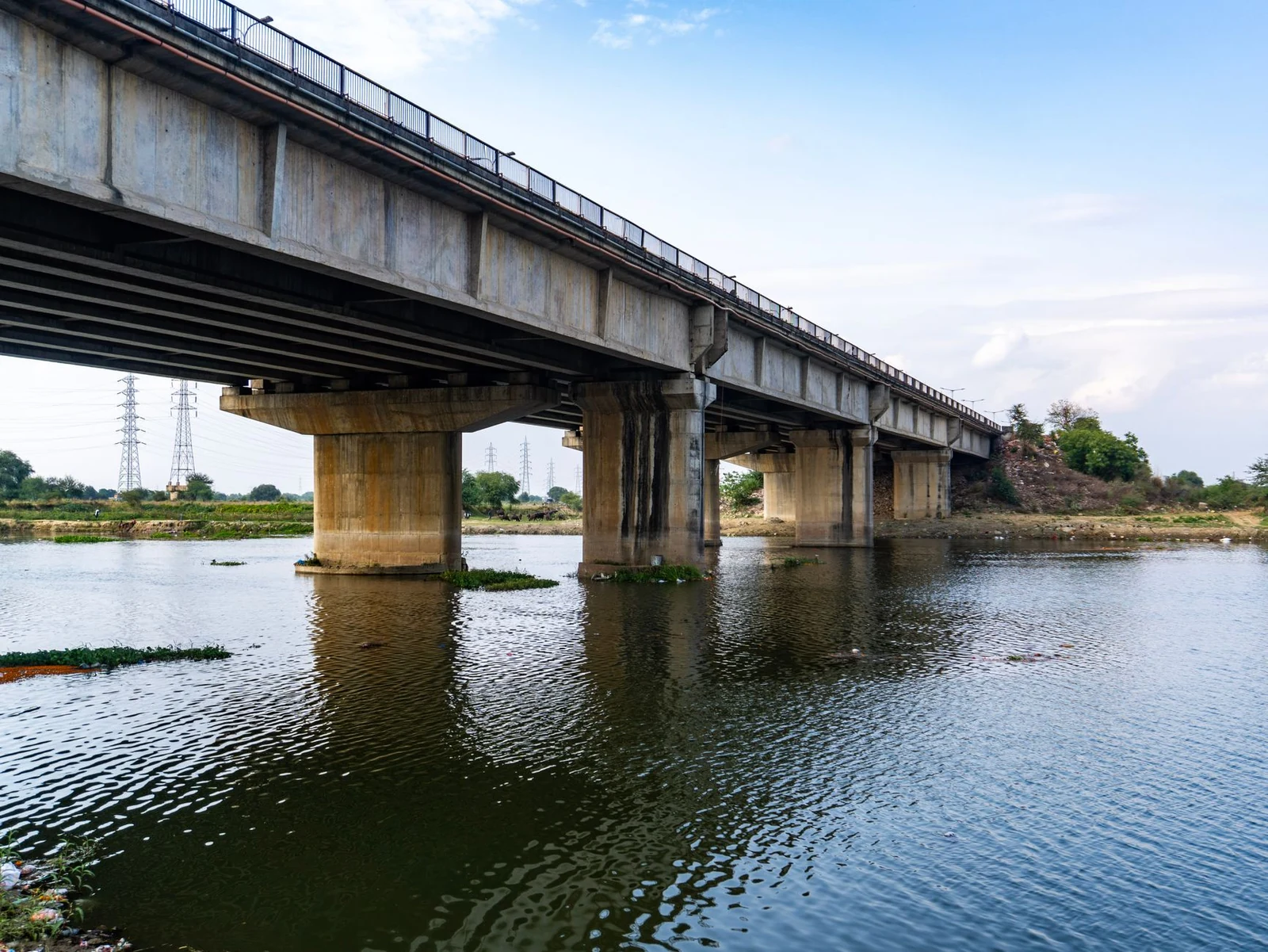
An infrastructure digital twin becomes useful when a sensor observation can update a specific asset model and support a defined decision. A live chart attached to a 3D scene is only part of that work. Establish identity, reference frames, data quality and model ownership before adding predictive features.
Table of Contents
Specify the decision the model will support
A bridge owner may want to identify a change worth inspecting. A mine operator may need to compare observations with a geotechnical model. A maintenance team may want to prioritize assets. These are different digital-twin tasks.
NIST’s digital-twin work emphasizes modeling, validation and actionable recommendations. Its manufacturing examples should not be transferred directly into structural-safety claims, but the emphasis on model purpose and lifecycle is applicable to the way an infrastructure project is specified.
A buying brief should state the output and the person who uses it. “Create a digital twin” is too broad to determine which sensors, historical records or models are necessary.
Build an observation-to-asset contract
The model must know what a measurement refers to. A displacement value needs a component, direction, reference and baseline. A temperature measurement needs its location and relevance to the modeled behavior. Sampling and aggregation definitions belong in that contract too; the monitoring sampling guide distinguishes sensor sampling, aggregation and reporting.
| Data element | Example meaning | Failure if omitted |
|---|---|---|
| Asset and component ID | Particular bearing, slope zone or foundation | Reading attached to the wrong object |
| Sensor installation ID | Physical device and mounting history | Replacement appears as uninterrupted continuity |
| Coordinate and direction | Local axis or global reference | Movement interpreted along the wrong direction |
| Units and baseline | Millimeters relative to a named epoch | Offset mistaken for new movement |
| Time and quality | Observation time and validity state | Stale or invalid data updates the model |
| Model version | Equations, parameters and assumptions | Results cannot be reproduced |
This is a semantic integration problem. A working network connection proves that values arrive; it does not prove that they mean what the model assumes.
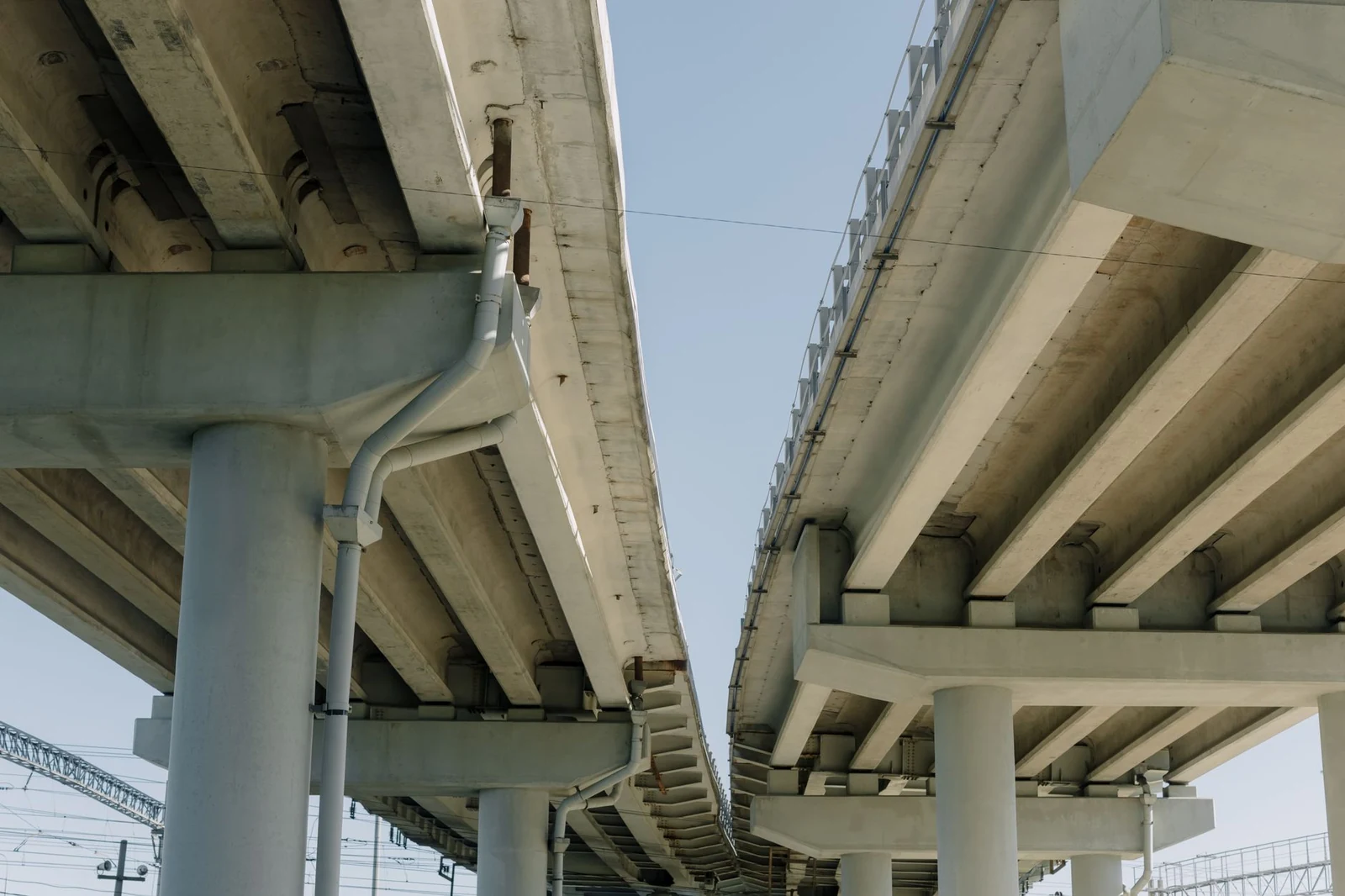
Consider a displacement sensor on a bridge bearing. The same 2 mm value could mean movement along the bridge, settlement of the pier or a change in baseline. The record needs the component, axis, reference epoch and unit before the model can classify it. Without those fields, a plausible number can update the wrong asset state.
The GNSS monitoring guide explains reference and coordinate issues in one measurement family. Those definitions should survive transfer into the twin rather than being simplified away.
Separate observation from prediction
Show measured data, estimated state and predicted behavior as different outputs. A model can fill gaps, but an estimated value should not become indistinguishable from an observation. Otherwise an apparently complete history can hide a failed sensor.
NIST IR 8356, published in February 2025, examines security and trust issues in digital-twin technology. It is useful context for treating data sources and model access as part of the architecture, rather than assuming that a digital representation is trustworthy because it is detailed.
Validation should test the decision output on data separate from the model-fitting process. Define what happens when conditions move outside the supported range. A model trained or calibrated under ordinary conditions may need different treatment during an unusual event.
Purchase the lifecycle, not only the first model
An infrastructure twin must survive sensor replacement, changed asset geometry, revised baselines and software updates. Assign ownership for the asset registry, model parameters and historical data. Include usable exports so the owner can change support providers without losing the meaning of the record.
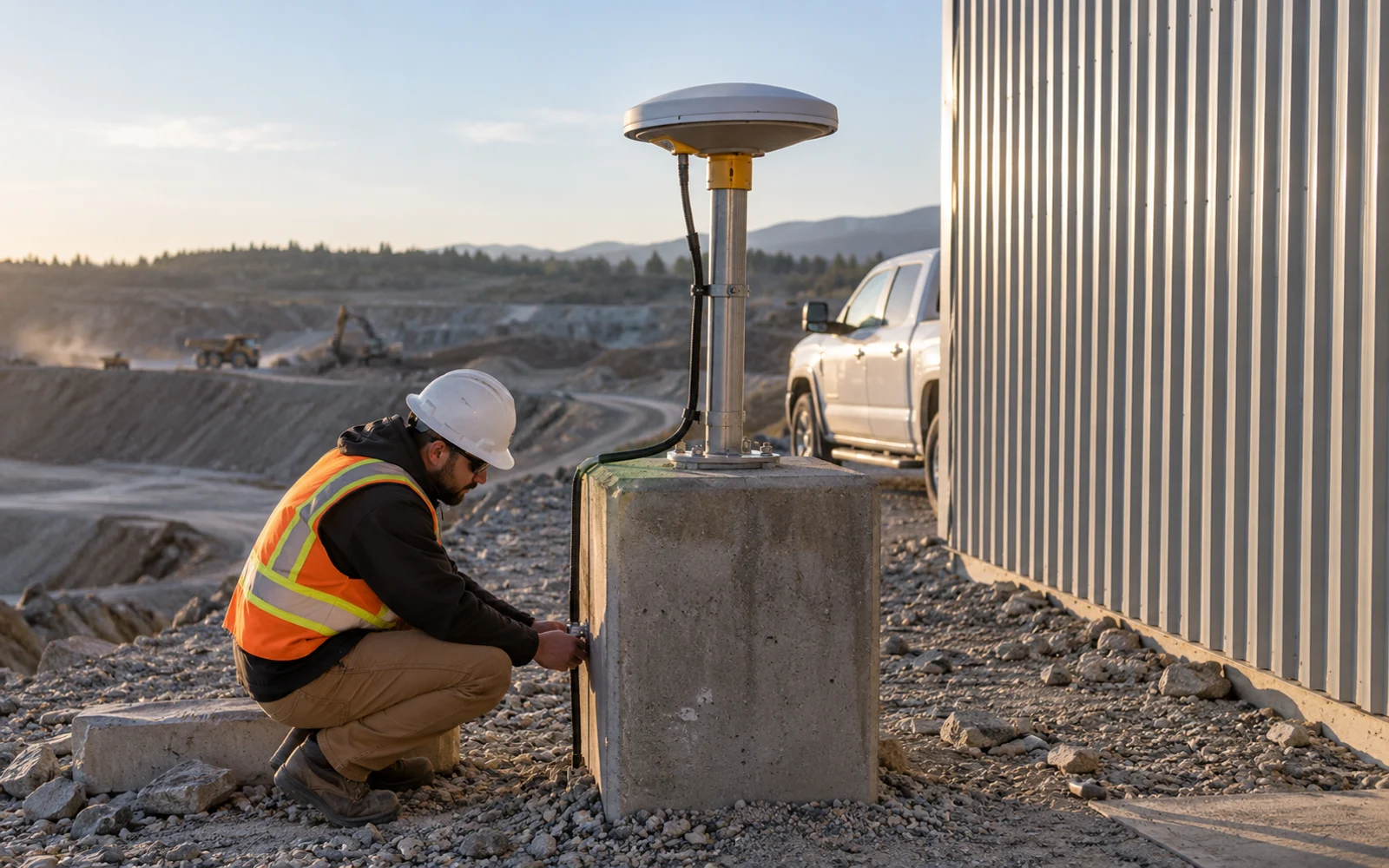
For deformation monitoring systems serving mining safety, begin with one bounded asset and decision. The bridge monitoring article provides a related example of linking measurements to engineering response.
A successful first phase allows an engineer to trace a recommendation back through the model to the actual measurements. Put the data dictionary, version history and validation scope in the project resources; more elaborate visualization can follow that foundation.
FAQs
Does every monitoring dashboard qualify as a predictive twin?
No. A dashboard can present current observations without a validated predictive model. Describe the delivered function precisely: visualization, state estimation, forecasting or decision support.
Can historical data be reused after a sensor replacement?
Often, but continuity depends on location, calibration, reference and configuration. Preserve the replacement event and any new baseline so the model does not interpret an equipment change as asset behavior.
Should a digital twin control equipment automatically?
Only if that control function is explicitly designed and authorized for the application. Observation and advisory analysis do not automatically establish the reliability or safeguards needed for control.
What belongs in an asset registry?
A stable asset and component identifier, location and coordinate reference, installation and replacement history, relevant drawings or models, and the owner of each record. The registry is the address that lets an observation update the correct model.