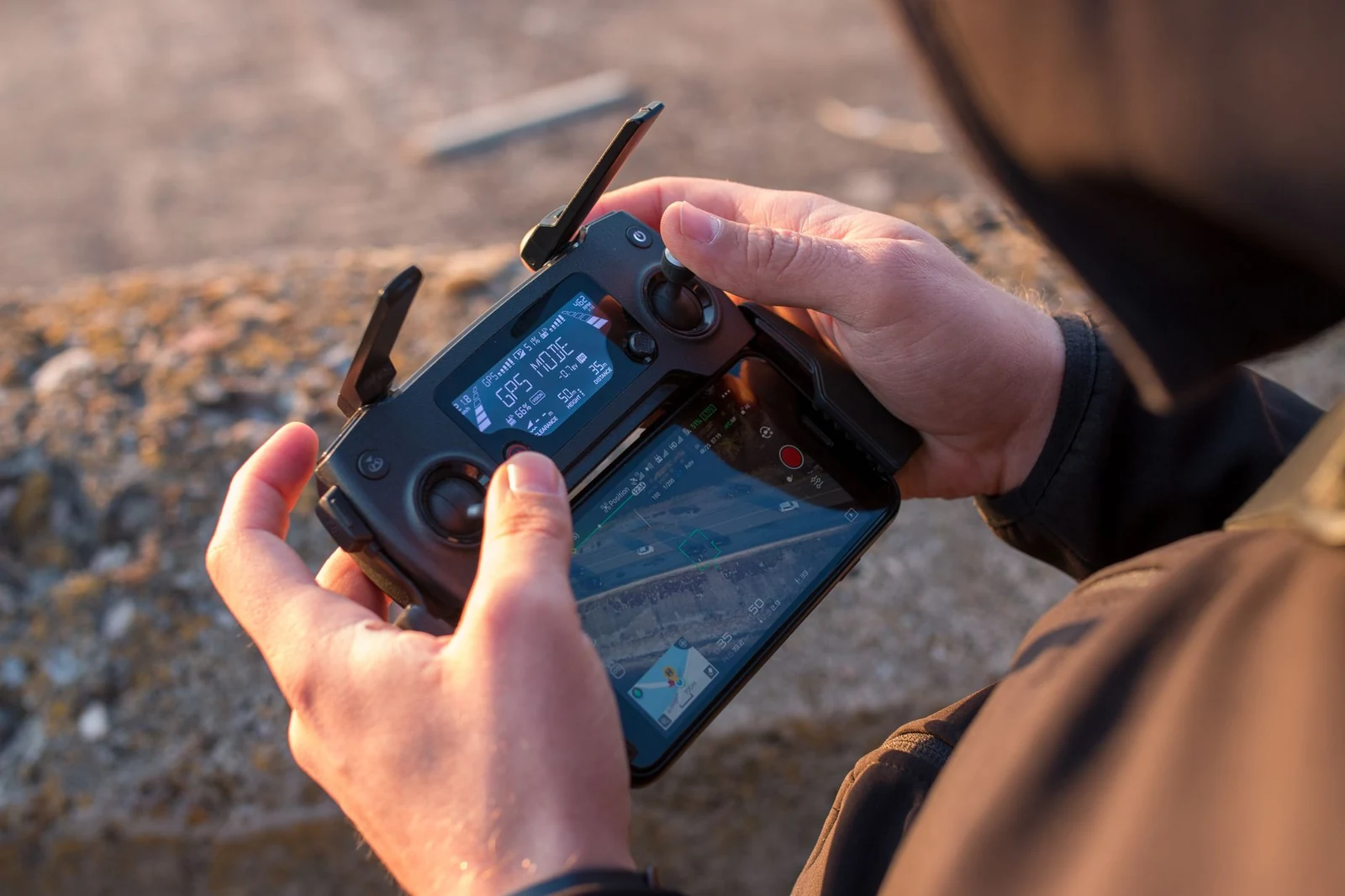
Drone cybersecurity procurement starts with where mission data goes and who can change the system. Evaluate the aircraft, controller, processing software, cloud accounts and support channel as one service chain. An encrypted radio link addresses only part of that chain.
Table of Contents
Follow a mission file through the system
Trace one image from capture to the accepted report. It may pass through aircraft storage, a controller, a removable card, a workstation, a processing service and a customer portal. At each step, identify the recipient, stored copy, retention period and deletion mechanism.
CISA’s Secure Your Drone guidance frames data protection across activities before, during and after flight. That lifecycle is a better starting point than a single “secure drone” checkbox.
For an industrial UAV purchase, map command traffic separately from payload data. They have different operational purposes and consequences if access or availability fails. A procurement requirement can permit a particular data transfer while restricting remote configuration changes.
Turn architecture into contract terms
A supplier response should describe the delivered configuration, including optional cloud features. “Local storage supported” does not say whether thumbnails, telemetry or diagnostic logs are also synchronized.
| Boundary | Decision the buyer makes | Demonstration or deliverable |
|---|---|---|
| Aircraft to controller | Authorized control and data recipients | Identity and pairing configuration |
| Controller to workstation | Approved transfer paths | Export and removable-media procedure |
| Workstation to cloud | Permitted data and destinations | Configured sync behavior and data-flow map |
| Administrator to fleet | Roles and change authority | Role matrix and account recovery |
| Supplier to installed system | Support access and duration | Time-bounded access and activity record |
| End of service | Data return and deletion scope | Usable export and account closure process |
This matrix is a purchasing method. It does not certify a product. Its purpose is to make a broad security statement testable in the exact deployment.
Ask for the map as a table, not a diagram alone. Each row should name the data type, creator, destination, transport, retention and deletion method. The buyer can then mark the rows that are mandatory, optional or prohibited in the accepted configuration. A diagram without those fields is a marketing illustration, not an operable boundary.
Supportability is a security feature
A vulnerability notice is useful only if the owner can identify affected equipment and deploy an appropriate correction. Preserve the aircraft, controller, payload and application versions in the configuration record. Assign responsibility for monitoring supplier notices and scheduling changes.
NISTIR 8259A provides a starting point for identifying cybersecurity capabilities in connected devices. Use a risk-based subset relevant to the UAV system rather than claiming that a general baseline constitutes aircraft certification.
The supplier’s software inventory is a separate but related purchasing question; the IoT SBOM guide explains how to connect component lists to vulnerability response.
Update behavior also has an operational consequence. A controller upgrade can change file handling or compatibility even when the airframe is unchanged. The maintenance plan should therefore include rollback or recovery arrangements and a representative post-change mission.
Assess the organization as well as the device
Named user accounts, recoverable administration and clear departure procedures reduce dependence on a single person. Define who can invite new users, change the organization, export mission archives and remove equipment. Treat shared demonstration accounts as unsuitable for routine production access.
Procurement eligibility and jurisdictional restrictions are a separate workstream. The NDAA-related purchasing guide explains why a label must be matched to the buyer, funding and transaction. A technical data-flow assessment should not be used to waive a separate eligibility requirement.
For critical infrastructure operations, the drone workflow has to fit the site’s existing identity, network and incident-response arrangements. That is a deployment decision, not a product feature.
The strongest shortlist is not the one with the longest security questionnaire; it is the one whose data paths and support obligations can be explained without hidden dependencies. Record the accepted account and data-ownership schedule with the technical resources, including which optional functions are enabled and how that state is preserved.
FAQs
Does an offline operating mode remove all cyber risk?
No. Removable media, firmware updates, service laptops and later data transfers still cross boundaries. An offline design needs a controlled way to update equipment and export results.
Is country of manufacture the same as a cybersecurity assessment?
No. Jurisdiction and procurement eligibility can impose separate constraints, while the technical assessment examines data paths, access, updates and support. Both belong in the applicable purchasing decision.
Who should own the cloud administrator account?
The contract should name the accountable organization and its recovery process. Avoid a production service whose only administrator is a departing employee or an uncontrolled supplier account.
What should the contract say about data return at end of service?
Define the export format, scope, time allowed and deletion evidence. The buyer should be able to retrieve mission data and account records without depending on the supplier's continued operation.
Can a supplier's remote support account be disabled?
The contract should define how support access is requested, time-bounded, logged and removed. Test that the buyer can disable the account without losing the ability to operate or update the equipment.