Radar range resolution describes separating nearby returns; range accuracy describes how close an estimated distance is to its reference. Confusing them can turn a valid bandwidth specification into an unsupported detection or tracking promise. A useful comparison assigns each claim its own test and assumptions.
Table of Contents
What is the difference between resolution and accuracy?
Range resolution concerns the separation of targets along the range dimension. Range accuracy concerns the difference between a distance estimate and an independent reference. They are related to the measurement process but are not interchangeable requirements.
An isolated return can sometimes be located to a fraction of the distance needed to distinguish two nearby returns. In a Texas Instruments technical response, TI separates the bandwidth relation for resolution from the role of signal-to-noise ratio in accuracy. That discussion does not certify every radar using the same terminology.
Write the question first: “How close is the reported distance?” or “Can these two returns be separated?” A single specification cannot answer both. Also distinguish repeatability from accuracy: closely grouped readings can share a systematic offset.
Calculate the ideal bandwidth limit
For a conventional frequency-modulated continuous-wave, or FMCW, range calculation, a common ideal relationship is:
ΔR ≈ c / (2B)
Here ΔR is range resolution in meters, c is wave propagation speed and B is effective bandwidth in hertz. TI’s Radar Academy distinguishes the valid sampled sweep bandwidth from the wider configured sweep.
Using approximately 300,000,000 m/s for c, an illustrative 150 MHz bandwidth gives 1 m; 300 MHz gives 0.5 m. These example bandwidths show the relationship in the formula; the operating bandwidth is defined by the equipment and its applicable authorization.
Check whether the quoted bandwidth is actually used by the installed mode. Do not substitute the carrier frequency for bandwidth. Two systems operating in the same frequency band can have different effective bandwidths and different range behavior.
Why are range bins not the acceptance result?
A range bin is a processing coordinate. Its spacing does not, by itself, demonstrate that two targets are distinguishable or that a reported position is accurate. Likewise, displaying more decimal places does not create stronger evidence.
Ask the supplier to define its use of “resolution”: waveform limit, processed response width, minimum demonstrated separation or export increment. Preserve the definition with the result. A comparison assembled from differently defined numbers is not a like-for-like comparison.
Target strength, background returns, processing and tracking must remain part of the evaluation. A clean isolated reflector demonstrates something different from two targets of unequal return strength. A range-only calculation also says nothing about whether targets can be separated in angle or velocity.
Match each specification to a different test
This editorial matrix separates claims that are often compressed into one datasheet row.
| Claim | Evidence required | Record alongside the result |
|---|---|---|
| Range accuracy | Reported distance against an independent distance reference | Reference uncertainty, geometry, bias and spread |
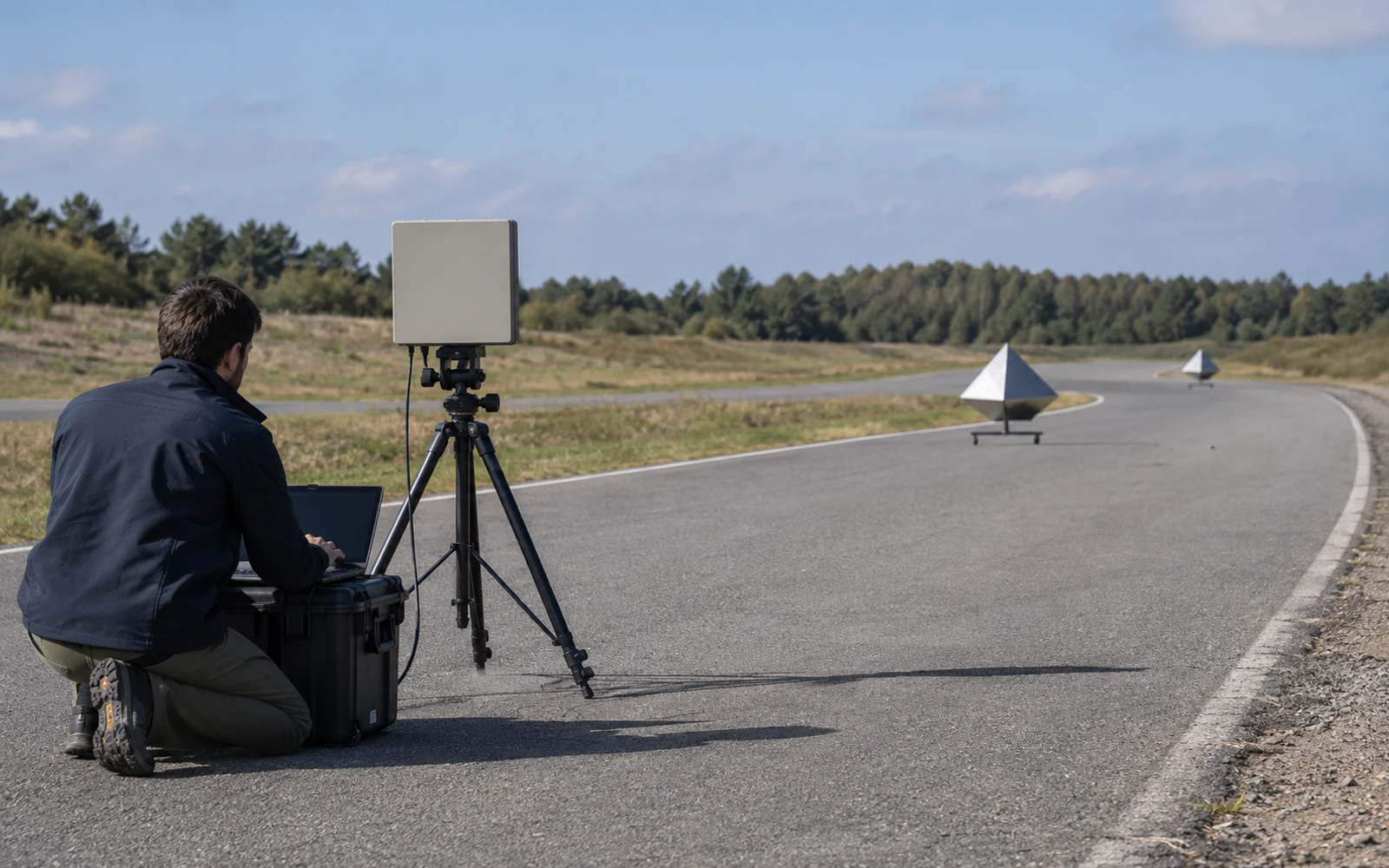
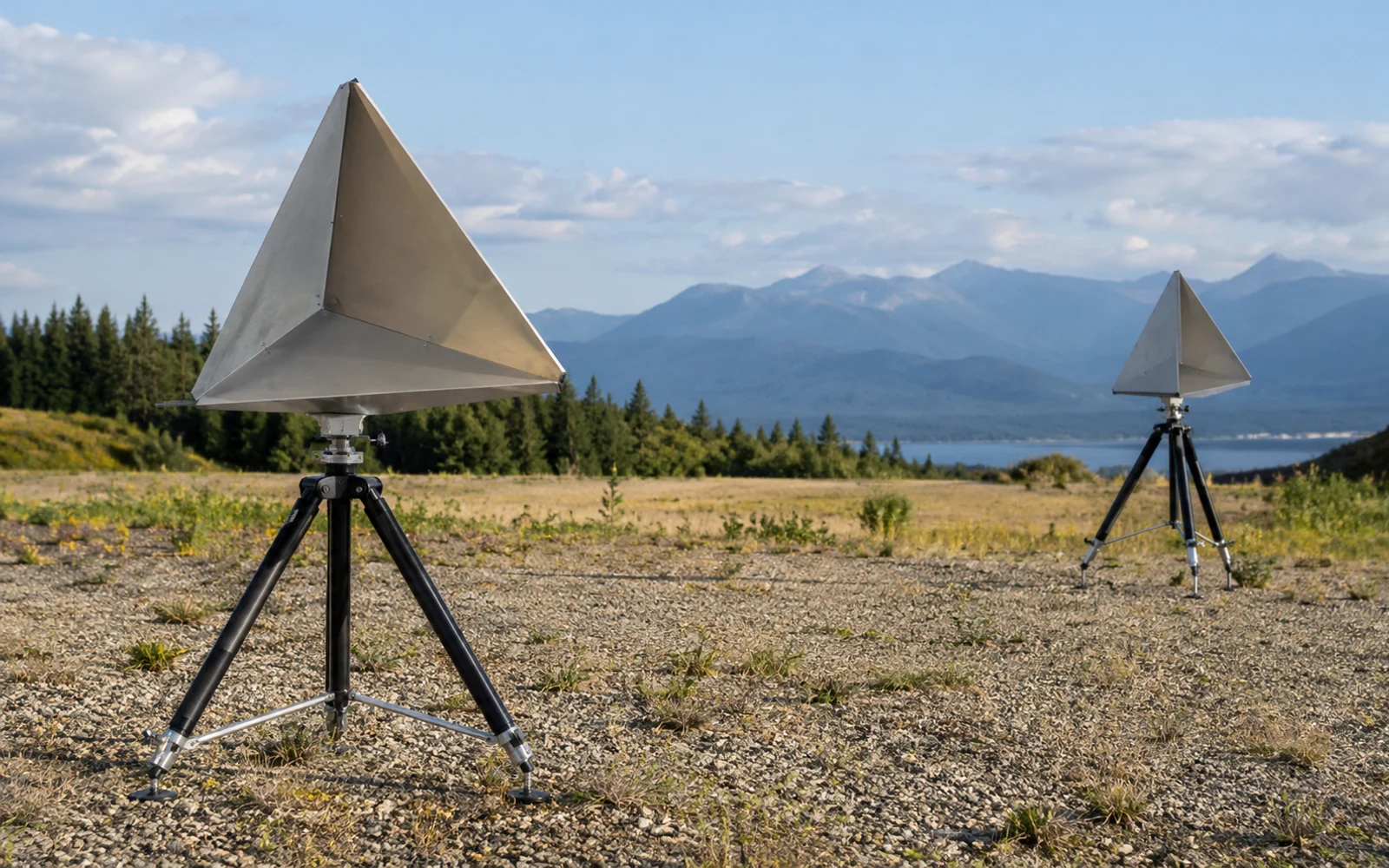
| Range resolution | Two known targets with controlled range separation | Relative return strength, angular relationship and declared separation criterion |
| Range-bin or export spacing | Processing definition and actual output values | Mode, units, quantization and any interpolation |
| Angular resolution | Separate targets with known angular geometry | Range, aspect and angular separation criterion |
| Track continuity | Time-aligned ground truth compared with track history | Gaps, merges, splits, identity changes and latency |
Choose tolerances for the actual application. Record the reference method and its uncertainty; otherwise a disagreement may be attributed to the radar when the comparison itself is inadequate.
For repeated observations, report distributions rather than only the best sample. Keep excluded observations and reasons available. A controlled test can establish a bounded claim without implying performance under every weather, clutter or target condition.
Carry the distinction into a civil detection project
For a civil counter-UAS configuration, useful outcomes include a coherent track and an appropriate verification handoff. Fine range resolution alone does not prove either. The broader counter-drone radar acceptance guide explains how to assess that chain.
Include a metric dictionary in the request for technical information: definition, units, mode, conditions, reference and acceptance method. Require any change of firmware or waveform mode to identify which claims need rechecking.
Compare the offered operating mode, bandwidth, processing and target geometry together. The useful result is separation of the required targets under the stated conditions, with accuracy and update rate assessed separately.
FAQs
What is the difference between radar range resolution and accuracy?
Range resolution concerns separating targets in the range dimension. Range accuracy concerns the error of an estimated target distance against a reference. A radar can estimate one isolated target more precisely than it can separate two nearby targets.
How is the ideal FMCW range resolution calculated?
A common ideal relation is delta R approximately c divided by twice the effective bandwidth. Using c approximately 300 million m/s, 150 MHz gives about 1 m. This does not include every practical processing or target effect.
Does fine range resolution guarantee two separate tracks?
No. Distinct tracks also depend on angular and velocity separation, signal conditions, detection logic and tracking behavior. Range-bin spacing and displayed decimal places are not substitutes for a multi-target test.