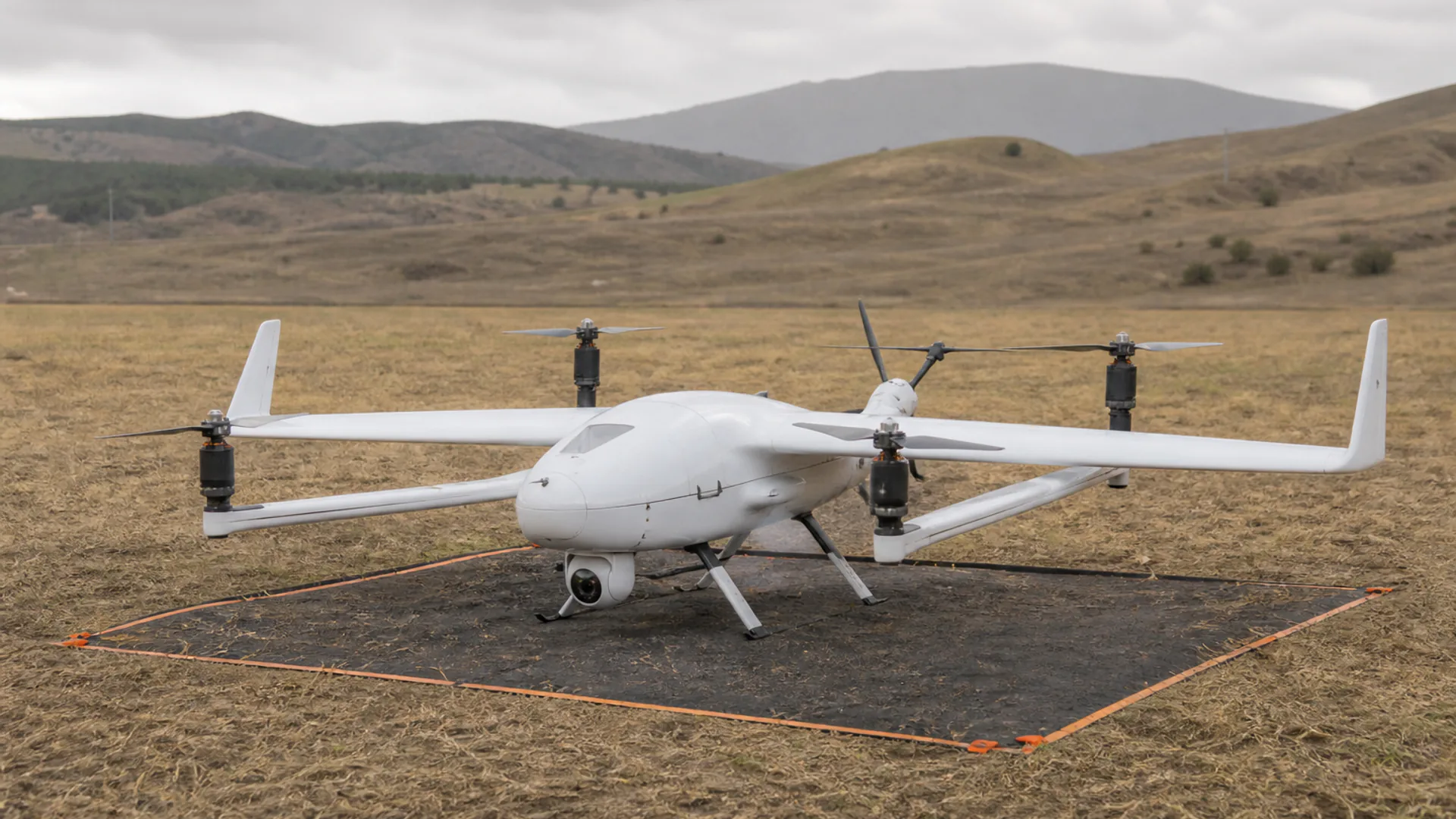
A listing for a VTOL drone is only the start of a procurement decision. The useful comparison is the complete, installed-payload system flying a representative mission with verified reserves, data quality, field logistics, support, and acceptance criteria.
Table of Contents
Define the Deliverable Before Choosing a VTOL
Write what the system must deliver: a mapped area at an accepted accuracy, a corridor with specified ground detail, a thermal anomaly register, a live observation feed, or another measurable output. Then state area, route length, terrain, elevation change, target resolution, turnaround time, annual workload, and repeatability.
This prevents a familiar mistake: selecting the aircraft with the longest brochure endurance and discovering that the installed camera, wind, climb, turns, reserves, and data overlap erase the promised production advantage. The purchased object is an evidence-producing field system, not an endurance number.
Separate required, preferred, and future missions. Size the base aircraft for frequent work. Rare heavier payloads or unusually long routes may be better served by a second configuration or contracted capacity than by making every routine mission carry excess cost and logistics.
Confirm That VTOL Is the Right Architecture
VTOL fixed-wing platforms combine vertical launch and recovery with wing-borne cruise. They are attractive where routes or areas are too large for efficient multirotor coverage and a runway or launcher is impractical. The trade includes transition complexity, a larger operating volume, different low-speed handling, and more demanding emergency planning.
Compare a VTOL with a multirotor and conventional fixed wing using the actual site. Consider transit distance, target dwell, turns, elevation, wind, landing surface, obstacles, vehicle access, crew, payload pointing, and the consequence of an interrupted mission. Close inspection that requires hovering may still favor a multirotor; broad repeatable mapping may favor VTOL cruise.
Vertical takeoff does not mean “launch anywhere.” Define a takeoff and landing zone, downwash and loose-debris control, GNSS and compass suitability, transition path, alternate landing areas, people exclusion, and recovery for a propulsion or link fault.
| Decision factor | VTOL fixed wing tends to fit when | Buyer must verify |
|---|---|---|
| Coverage | Large blocks or corridors dominate the mission | Accepted output per battery with planned reserve |
| Launch access | Runway or launcher is unavailable | Vertical zone, transition volume and alternatives |
| Payload | Sensor works during stable forward flight | Installed weight, power, vibration and field of view |
| Terrain | Long routes cross variable access | Climb margin, terrain model and command coverage |
| Observation | Transit efficiency matters more than stationary dwell | Turn radius, speed window and target revisit process |
Specify Installed-Payload Performance
Ask for mass, balance, endurance, coverage, climb, wind, and reserve with the delivered payload, mount, antennas, and required accessories. State the reference altitude, temperature, battery condition, route type, takeoff/landing allowance, and reserve policy. A no-payload maximum is not a planning value.
For mapping, specify the evidence at the ground: required ground sample distance, overlap, blur limit, exposure control, geotag and timing integrity, calibration, and raw-file availability. For thermal or other sensing, define the physical target, measurement metadata, environmental limits, and required validation.
Review the whole payload interface: mechanical retention, center of gravity, power quality, command, trigger, timing, navigation, metadata, storage, cooling, electromagnetic compatibility, and emergency behavior. Require configuration control so a later payload or firmware change cannot silently invalidate earlier acceptance evidence.
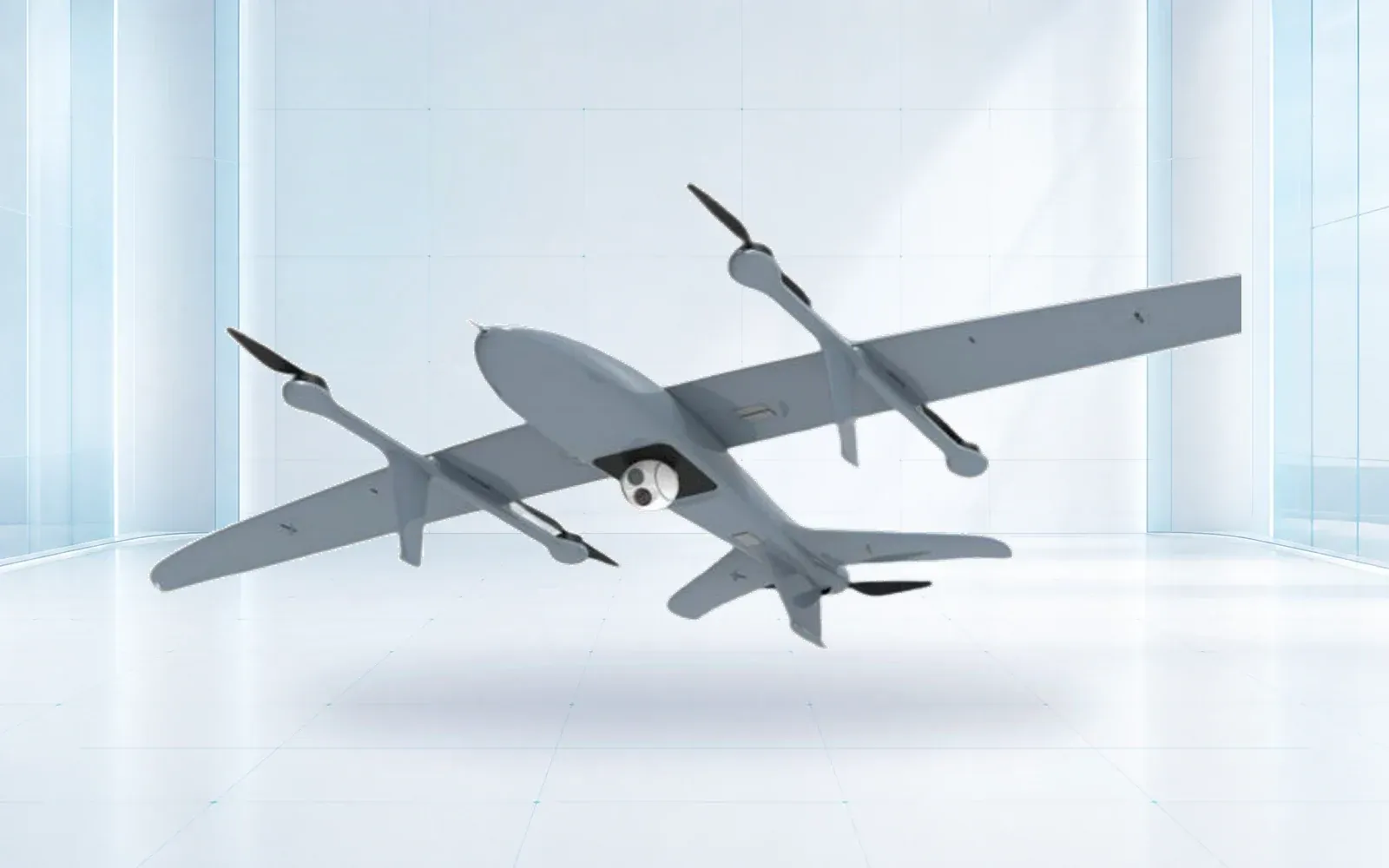
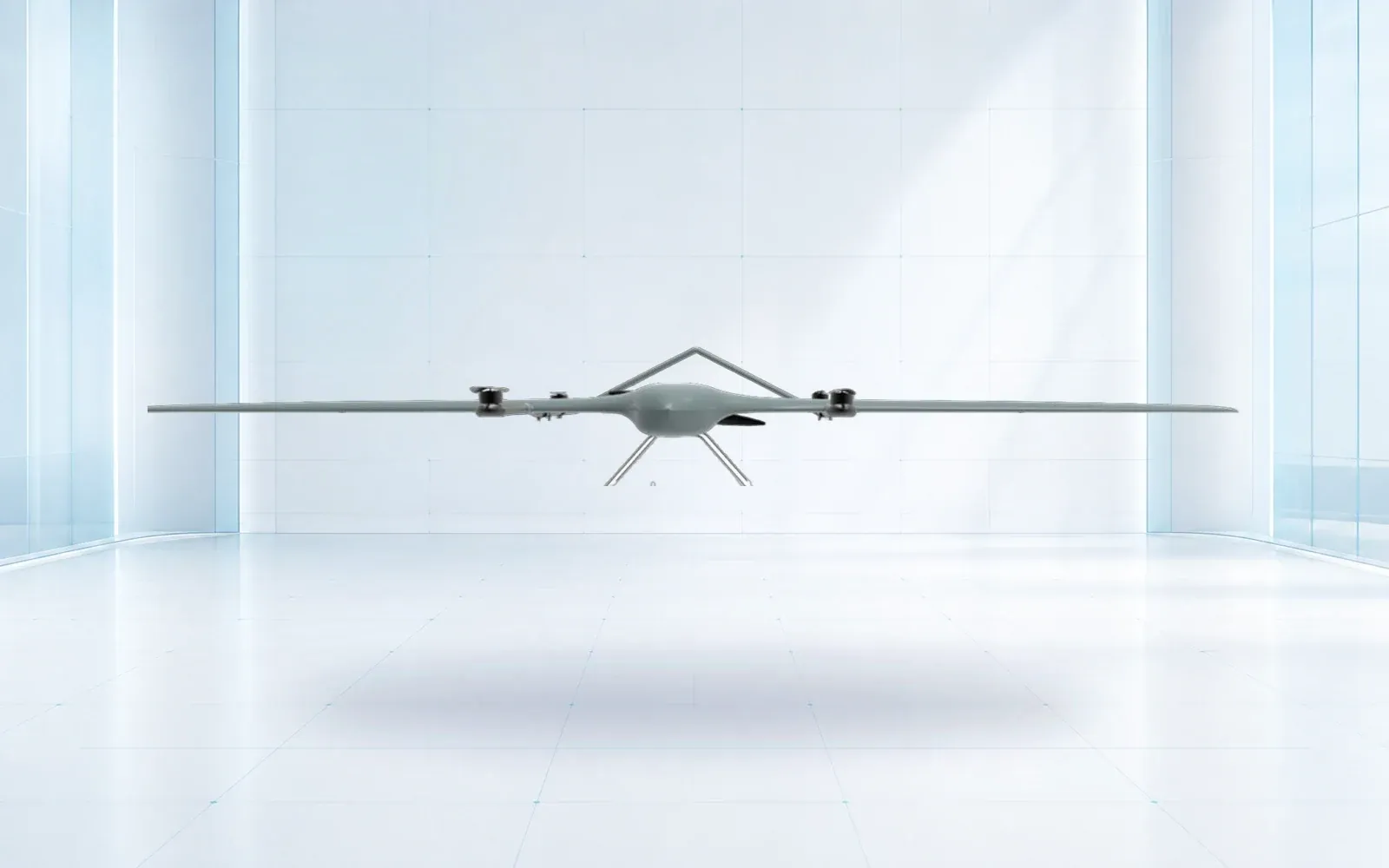
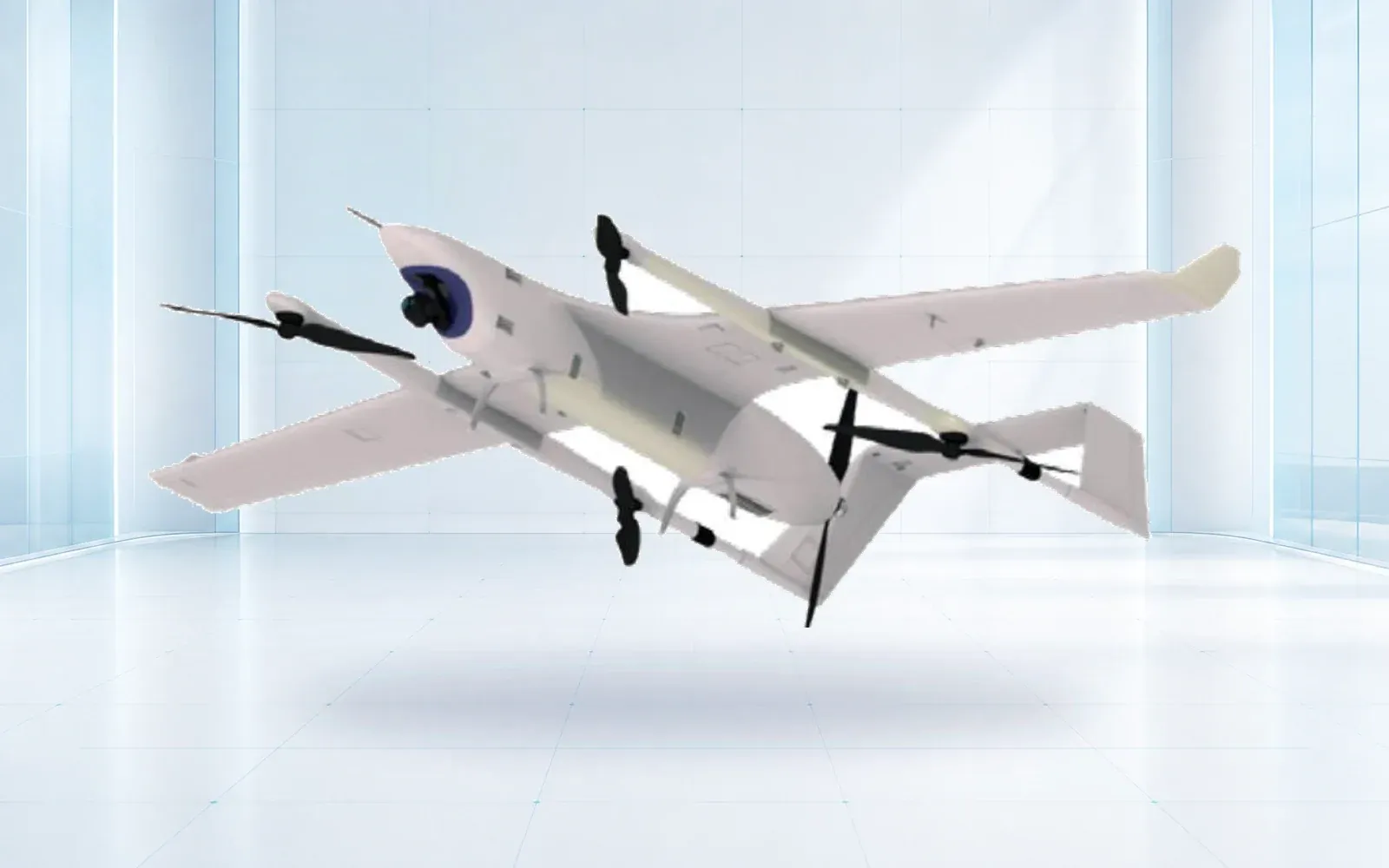
The ZJ-G20 VTOL, ZJ-G25 VTOL, and 3500 tilt-rotor VTOL represent different starting architectures. Match a verified configuration to the mission instead of treating a portfolio as a ranked list.
Evaluate Navigation, Command, and Data Architecture
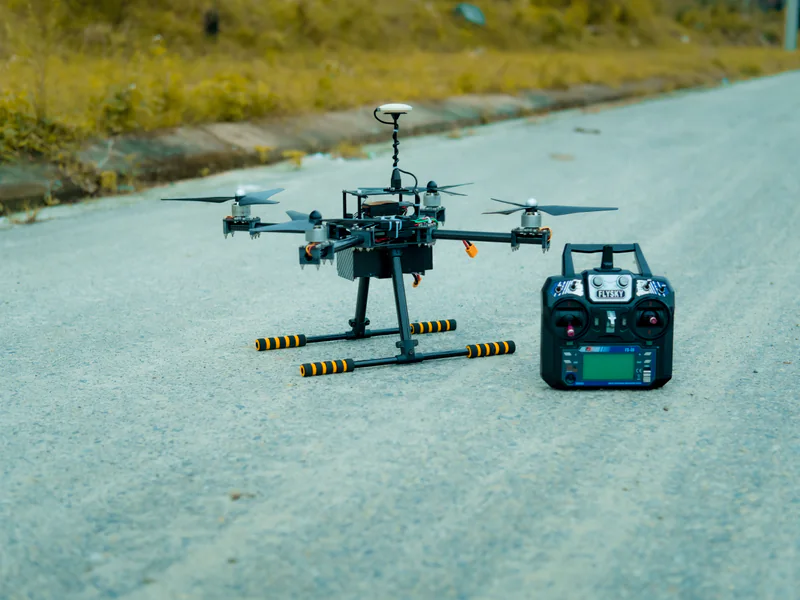
Specify route accuracy, altitude source, terrain following, geofence behavior, lost-link action, return logic, flight-log contents, and time synchronization. Inspect how the system alerts degraded GNSS, compass, airspeed, power, and communications rather than only whether it can complete a nominal automated route.
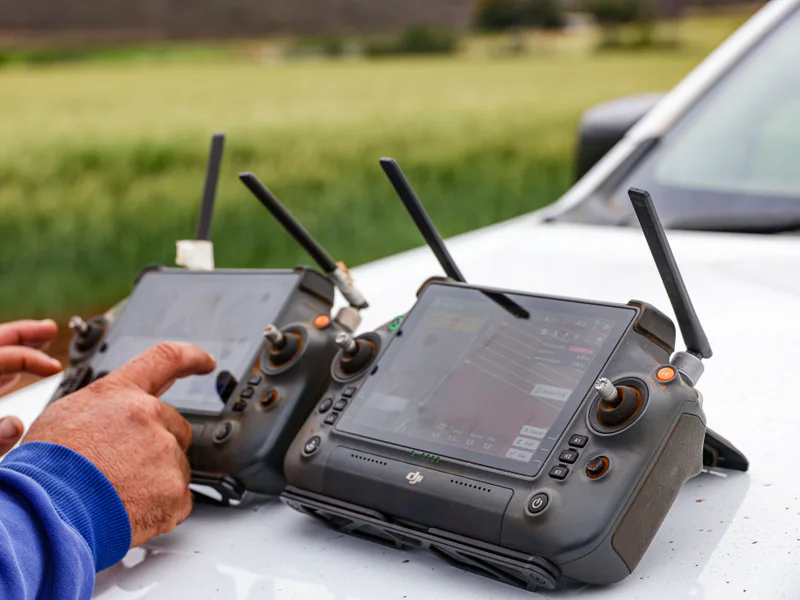
Define command-and-control around the intended geometry. Map likely shadowing, antenna placement, terrain, interference, handover, and contingency areas. Range claims without antenna height, environment, data rate, latency, and link criteria do not establish operational coverage.
The FAA’s current Part 107 information states the baseline for many U.S. small-UAS operations. BVLOS and other operations outside applicable rules need the correct approval route; the Part 107 waiver page shows why a product’s advertised range is not an operating authorization.
Compare the Complete VTOL Drone Price
Require the quote to identify aircraft, batteries, chargers, ground station, antennas, cases, payload, integration, calibration, software, maps, connectivity, training, manuals, spares, tools, warranty, repair, freight, duties, commissioning, and acceptance. Note items supplied by the buyer.
Normalize recurring fees and replacement items across the planned ownership period. Ask about battery availability, propellers, vertical and cruise propulsion components, actuators, payload mounts, airframe repair, software support, and lead times. A grounded system can cost more than a premium support package.
Compare cost per accepted unit of work at low, expected, and high utilization. Include setup, launch-zone preparation, data processing, reflight, travel, and seasonal access. The industrial drone cost guide provides the broader TCO framework; this article applies it to VTOL-specific tradeoffs.
Audit the Supplier and Evidence File
Use a versioned evidence index rather than a folder of undated brochures:
| Evidence item | Must identify | Buyer check |
|---|---|---|
| Delivered configuration statement | Airframe, propulsion, payload, mount, link, ground station, batteries and software | Matches the quotation and acceptance aircraft |
| Performance basis | Payload, route, reserve, weather, altitude, battery state and calculation/test method | Supports the planned mission rather than an empty-airframe maximum |
| Safety and maintenance data | Limits, inspections, life items, faults, updates and repair authority | Creates an operable maintenance and grounding process |
| Software/cyber record | Versions, accounts, logs, update policy, vulnerabilities and data export | Preserves control and evidence through ownership |
| Supply and support file | Origin, lead times, spares, warranty, repair route and end-of-life notice | Makes downtime and replacement assumptions testable |
| Acceptance cross-reference | Requirement, test step, evidence file, result and open action | Prevents a successful flight from closing unrelated requirements |
Request controlled manuals, configuration identifiers, maintenance schedule, service limits, training syllabus, software support policy, cybersecurity information, export documentation where relevant, and references that match the mission. Distinguish current, delivered functions from development-roadmap statements.
For U.S. operations, confirm the delivered configuration’s applicable Remote ID path. Review registration, serial identity, updates, and fleet records. Do not rely on a generic platform-family statement if modules, firmware, or imported configuration can vary.
Use a compliance matrix with document references. Where evidence is incomplete, identify the site test, engineering review, or contractual condition that will close it. A supplier’s willingness to expose assumptions and failed cases is often more valuable than a polished nominal demonstration.
Accept the System on Representative Missions
Factory acceptance should verify delivered configuration, records, assembly, interfaces, payload control, basic flight functions, logging, software, spares, and safety actions. Site acceptance should use representative terrain, wind bounds, route geometry, payload, target, command coverage, and field crew.
Test vertical launch, transition in both directions, route following, image or sensor evidence, reserves, lost-link or degraded-link procedures, rejected takeoff, alternate recovery, data export, and a second deployment after pack-up. Score the agreed output, not just flight completion.
Carry the accepted aircraft into mission-specific workflows instead of assuming one VTOL test proves every use. The crop monitoring drone guide adds calibration, field truth and agronomic delivery, while the mining UAV guide adds elevation, dust, traffic and mine-specific acceptance units.
Document operating limits and retest triggers. Material changes to propulsion, battery, payload, mount, navigation, command link, flight-control software, processing, or route assumptions should receive proportionate review.
Use the industrial UAV category, critical infrastructure solution, and technical resources to prepare the specification, then contact OMNI UXV with the intended payload, area or corridor, launch constraints, deliverable, and acceptance scenario.
FAQs
How much does a commercial VTOL drone cost?
Price varies with airframe size, payload, endurance, navigation, communications, ground equipment, training, software, spares, and support. Compare complete mission configurations rather than bare-airframe listings.
Does a VTOL fixed-wing drone need a runway?
It normally launches and lands vertically, but it still needs a surveyed operating area with obstacle, people, downwash, transition, emergency, and recovery considerations.
Can published endurance be used to plan production?
Not by itself. Buyers need endurance or coverage evidence with the installed payload under defined weather, altitude, reserve, route, and battery conditions.
What should a VTOL drone acceptance test include?
Use the intended payload and crew on representative terrain, then test launch, transition, route tracking, link behavior, evidence quality, reserves, contingency actions, processing, and repeat deployment.