A heavy-lift drone should not be selected by its largest advertised payload. The usable limit is the load, attachment, center of gravity, weather, route, reserve energy, ground operation, and failure outcome that can all be demonstrated in the intended mission.
Table of Contents
- Define the Lift Mission Before Comparing Aircraft
- Build the Complete Payload and Center-of-Gravity Envelope
- Convert Rated Payload Into Usable Mission Endurance
- Treat Load Control and Failure Behavior as System Requirements
- Match the Airframe Class to the Lift Geometry
- Put Regulation, Crew, and Ground Handling Into the Selection
- Accept the Delivered System on Representative Lift Missions
- FAQs
Define the Lift Mission Before Comparing Aircraft
Start with the object and the decision, not the airframe. Record the load’s measured mass, dimensions, center of gravity, lifting points, aerodynamic area and sensitivity to shock, moisture or orientation. Then describe whether the mission is a point-to-point delivery, a suspended lift, a precision placement, a release, or an installation that requires the aircraft to hold position.
Route geometry changes the answer. A short vertical lift inside a controlled worksite is not equivalent to carrying the same object across a valley, over water or near occupied structures. Mark takeoff, pickup, transit, placement, alternate landing and load-jettison areas. Identify who may enter each zone and who has authority to stop the operation.
In the United States, the FAA describes Part 107 as the framework for small UAS under 55 pounds, including payload, while delivery operations can involve a different certification path such as Part 135 package delivery. In Europe, higher-risk missions may require an authorization supported by a risk assessment such as SORA. These are jurisdiction-specific starting points, not universal permission for a heavy lift.
Build the Complete Payload and Center-of-Gravity Envelope
Payload means everything added for the task: the carried object, cradle, sling, line, hook, release unit, load cell, protective cover, power converter, tracking beacon and any cable between the aircraft and load. Weigh the complete assembly rather than adding optimistic brochure values.
A fixed payload moves the combined center of gravity and may obstruct airflow or sensors. A suspended load adds pendulum motion, yaw, drag and the possibility of snagging. The line length that clears the rotors may also increase swing and ground-handling difficulty. Document approved attachment points and limits for load position, not just total mass.
Ask the supplier to state whether each payload claim applies to a mounted or suspended load, and under which center-of-gravity, altitude, temperature, wind and battery conditions. If those conditions are absent, treat the number as a screening value rather than an operating limit.
Convert Rated Payload Into Usable Mission Endurance
Build an energy budget by phase: takeoff, climb, acceleration, cruise or translation, hover, placement, retreat, return and landing. Add the energy needed to reach a preselected alternate if the primary landing area becomes unavailable. The reserve must exist at the end of the most demanding credible mission, not only after an unloaded demonstration.
Wind affects both power and control. A large box may weigh less than a compact tool but demand more thrust and create greater swing. Density altitude, cold or hot battery behavior, cell imbalance and battery age also change the available margin. Establish dispatch limits from measured mission data and repeat them with batteries representative of the service fleet.
This is where a general industrial UAV datasheet review helps: separate maximum, nominal and tested values before building a shortlist from the industrial UAV category.
Treat Load Control and Failure Behavior as System Requirements
Define normal, degraded and emergency states before flight. The plan should cover load oscillation, release failure, an unintended release indication, propulsion asymmetry, navigation degradation, command-link loss, obstacle-avoidance unavailability and a blocked landing zone. For each state, state whether the aircraft holds, returns, lands, moves to a safe area or retains the load.
Automatic behavior can create a new hazard. A return-to-home climb may be unsafe with a long line; an automatic landing may place a suspended object outside the intended exclusion zone. Simulate the logic first, then conduct progressive tests with inert loads and controlled areas.
People who attach and detach loads need a positive handoff with the remote pilot. Use a single load status vocabulary, an agreed stop signal and a rule that no one approaches until the aircraft and load are in the defined safe state.
Match the Airframe Class to the Lift Geometry
Multirotors provide direct vertical access and precise low-speed positioning, but pay for hover with energy. Winged or VTOL configurations can cover longer routes efficiently, yet their transition, landing area and load geometry may constrain the lift. Hybrid power can change endurance and refueling logistics, but also adds heat, fuel, vibration and maintenance considerations.
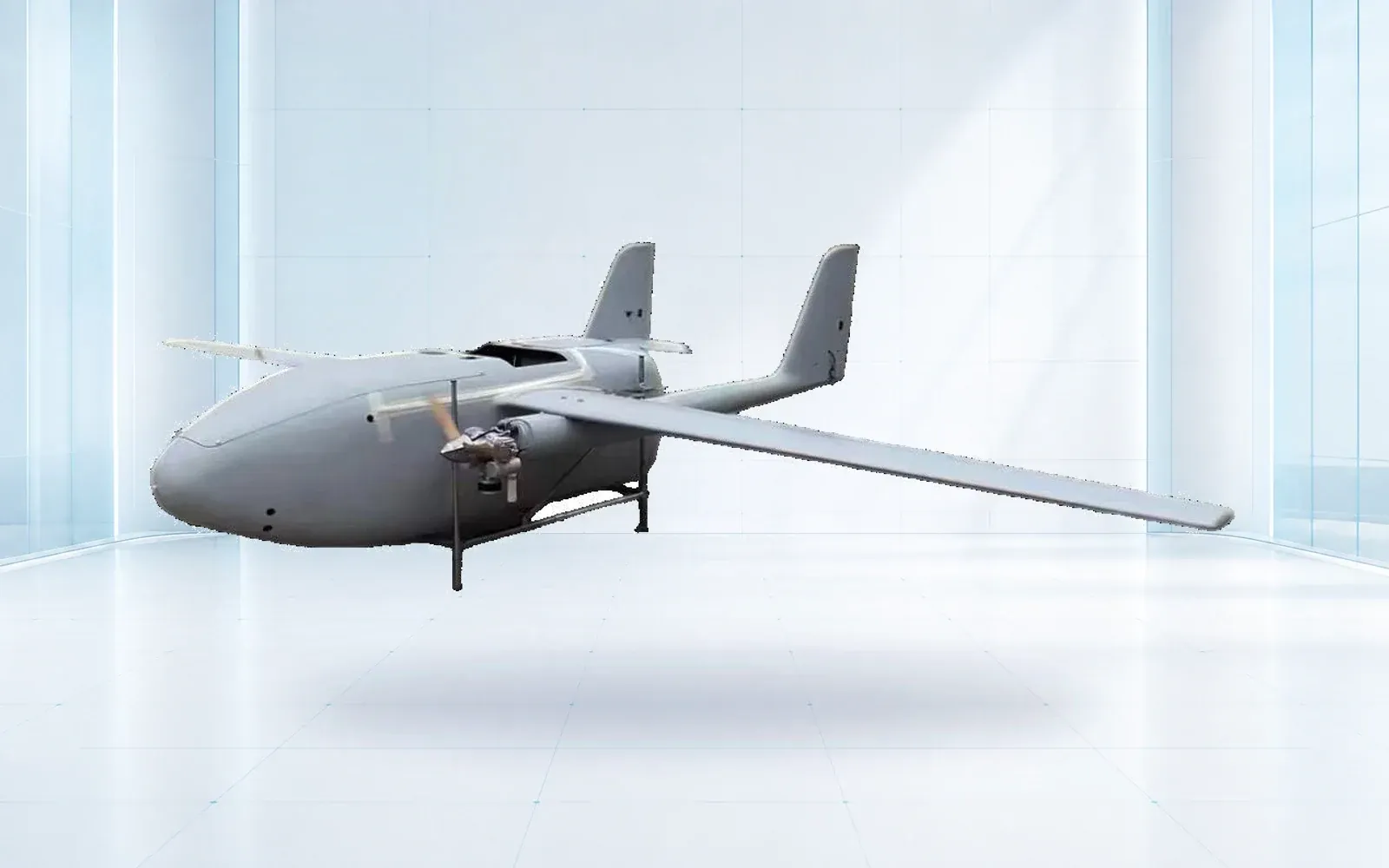
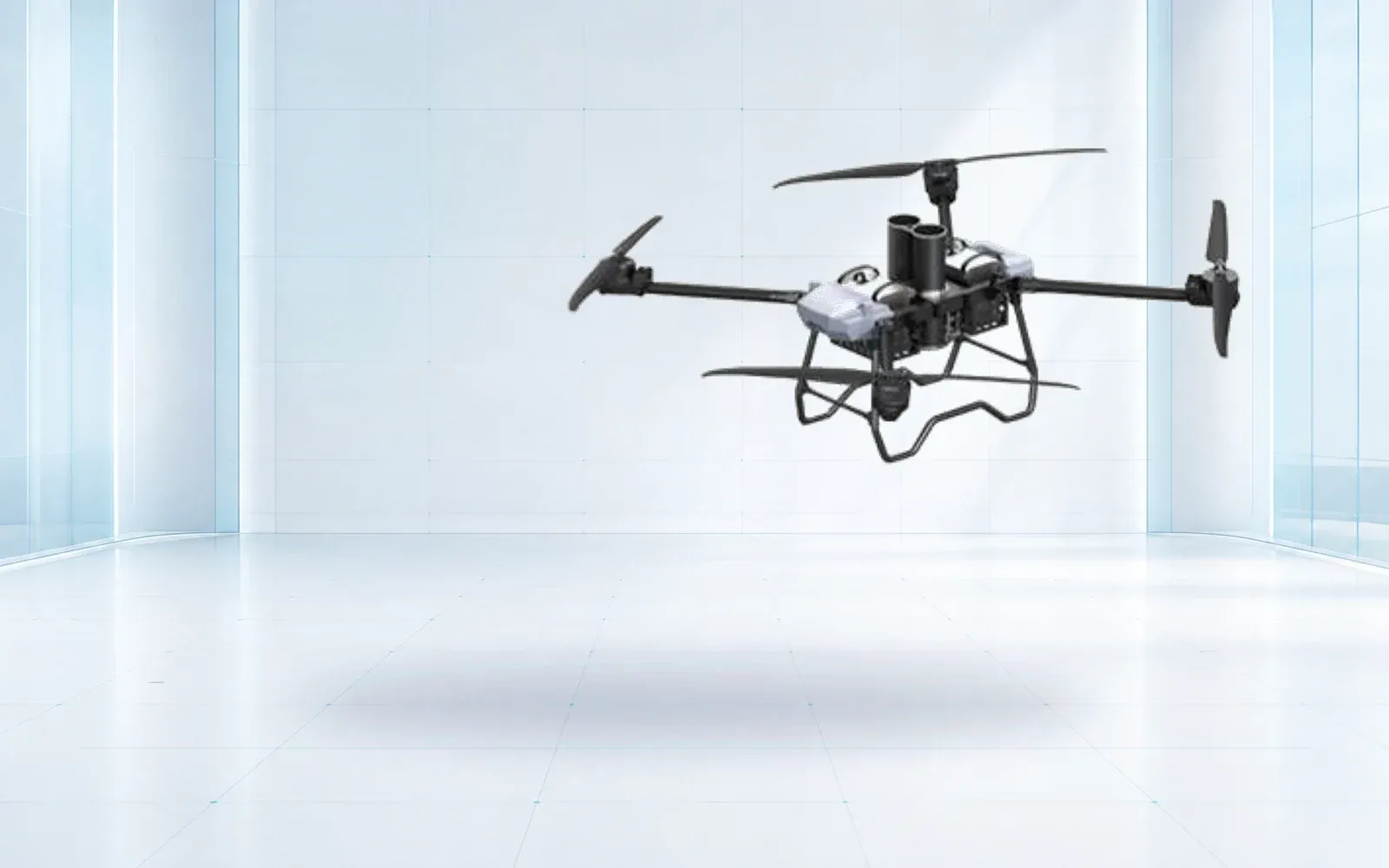
OMNI UXV’s heavy-lift range includes different reference configurations rather than one universal answer: the ZJ-G150, ZJ-X13, KT25, KTC3, KTX3 and KTZ3. Compare them only after the mission envelope is fixed, and request configuration-specific evidence instead of transferring a figure from one variant to another.
Put Regulation, Crew, and Ground Handling Into the Selection
The aircraft is only one part of the deployed system. Price transport cases, batteries or fuel, chargers, load-handling equipment, spares, weather monitoring, fire controls, inspection tools and the personnel needed to establish exclusion zones. Check whether the complete system can reach the worksite and whether components can be lifted safely without the drone.
Define competence for the remote pilot, payload operator, load handlers, safety lead and maintenance technician. Training should include rejected launches, misrigging, unexpected load motion and recovery after a hard landing. The operating concept should also cover local airspace, landowner approval, hazardous areas and any carriage or delivery approval that applies.
The 2026 drone procurement checklist provides a broader operating-concept framework; the lift project still needs its own hazard analysis and authority review.
Accept the Delivered System on Representative Lift Missions
Acceptance should prove the mission, not reproduce a polished sales flight. Begin with documents, serial numbers, software versions, mass and center-of-gravity checks. Inspect load paths and releases. Progress from tethered or restrained checks to light inert loads, then representative mass and geometry across the agreed route.
| Requirement | Evidence before flight | Representative acceptance test |
|---|---|---|
| Complete payload | Weighed load, rigging list and attachment drawing | Weigh and inspect the assembled configuration |
| Control and placement | Approved CG and load-geometry envelope | Repeat pickup, transit and placement with measured error |
| Energy reserve | Phase-based mission model and battery criteria | Fly the demanding route and verify landing reserve |
| C2 and navigation | Link architecture and lost-link logic | Introduce approved degradations and confirm aircraft behavior |
| Load retention or release | Inspection, command and inhibit logic | Test normal action, failed command and safe-state recovery |
| Crew and ground zone | Roles, signals and exclusion drawing | Run a complete mission with the operating crew |
| Maintainability | Inspection limits, logs and spares | Perform post-flight checks and retrieve complete records |
Repeat enough cycles to expose heat, battery, connector and procedure drift. Require raw flight and power logs, maintenance instructions, configuration control and an exceptions list at handover. A system passes when the customer can reproduce the result safely, not when one demonstration succeeds.
For a mission-specific shortlist, use the technical resource library to assemble the load and acceptance record, then contact OMNI UXV with the measured load, route, environment and required failure behavior.
FAQs
How much weight can a heavy-lift drone carry in a real mission?
Usable payload is the mass that remains after the attachment, release hardware, protection, power and required reserves are counted, and after the aircraft demonstrates control throughout the actual route and weather envelope. It is normally lower than an isolated maximum-payload figure.
Why is a suspended load harder to carry than a mounted payload?
A suspended load can swing, rotate and change the combined center of gravity while adding drag. The aircraft and load-control method must be tested together because the same mass can create very different control demands when fixed to the frame or carried on a line.
What should a heavy-lift drone acceptance test include?
Acceptance should include verified mass and interfaces, representative routes, wind and reserve limits, repeated pickup and placement, command-link degradation, release or retention behavior, emergency landing logic, logs, crew procedures and post-flight inspection.
Does a cargo-drone mission always operate under ordinary small-drone rules?
No. Aircraft mass, carriage for compensation, flight location, people on the ground and operational model can change the approval path. The operator must determine the rules in the relevant jurisdiction before treating a lift mission as routine.