
Market & Regulation
Drone Delivery Economics: What 2026 Expansion Means for Buyers
Interpret 2026 drone-delivery expansion signals using a cost-per-successful-delivery model that includes utilization, failed attempts and ground work.
OMNI UXV Technical Insights · 167 articles · Page 3 of 19
Practical guidance for selecting, integrating and operating unmanned, sensing and security systems—from mission definition and procurement to compliance, acceptance and lifecycle support.
Technical editorial archive
Showing 19–27 of 167
Interpret 2026 drone-delivery expansion signals using a cost-per-successful-delivery model that includes utilization, failed attempts and ground work.

Compare Remote ID, RF recognition and radar observations without confusing broadcast identity, measured position and authorization.
Structure a BVLOS drone purchase around the actual operating pathway, aircraft configuration and staged commitments as US rulemaking evolves.
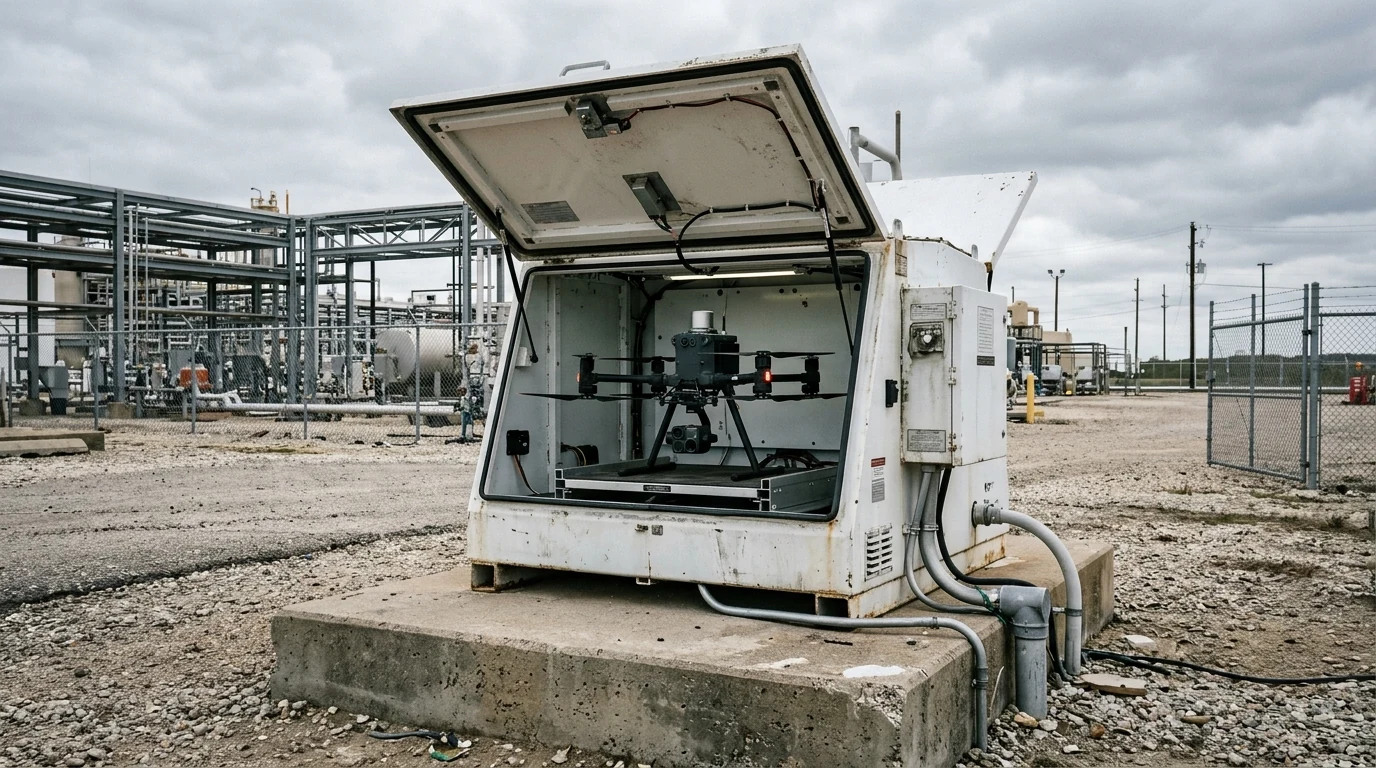
Plan a drone dock installation around electrical supply, networking, landing access and recovery, with a site-state matrix for procurement.
Compare an in-house drone inspection team with a managed service using accepted-job costs, utilization and a transparent break-even example.

Understand LiDAR-to-INS boresight calibration, lever arms and timing errors, with a range-error example and a survey delivery matrix.

Define security event identity, distinguish replay from new transitions, and test alarm deduplication through reconnects without hiding incident history.

Calculate security camera pixel density at the target plane, then verify near, far, edge and night detail in the recording that operators will use.

Compare time to collision and post-encroachment time with worked examples, trajectory-quality checks and limits on traffic safety interpretation.
Content hierarchy
Categories keep the editorial library navigable as it grows. Each article links to its parent product category, relevant solution architecture and supporting resources.
System architecture, sensing, interfaces and acceptance methods.
Selection frameworks that turn datasheet claims into testable requirements.
Field workflows, alarms, evidence and human decision-making.
Current policy signals and their practical implications for procurement.
Transaction due diligence, classification and documentation workflows.
Use the guides to frame the operating problem, then send us the mission, site and destination for a traceable equipment review.
Discuss your requirements